
What can stop charging
- Internal alternator failure
- Loose or worn belt
- Poor cable or ground connection
- Fuse or wiring problem
- Control-side charging fault
Charging Guide
If the battery keeps needing a jump and charging voltage stays low with the engine running, the alternator, belt drive, wiring, or control side of the charging system may be failing.
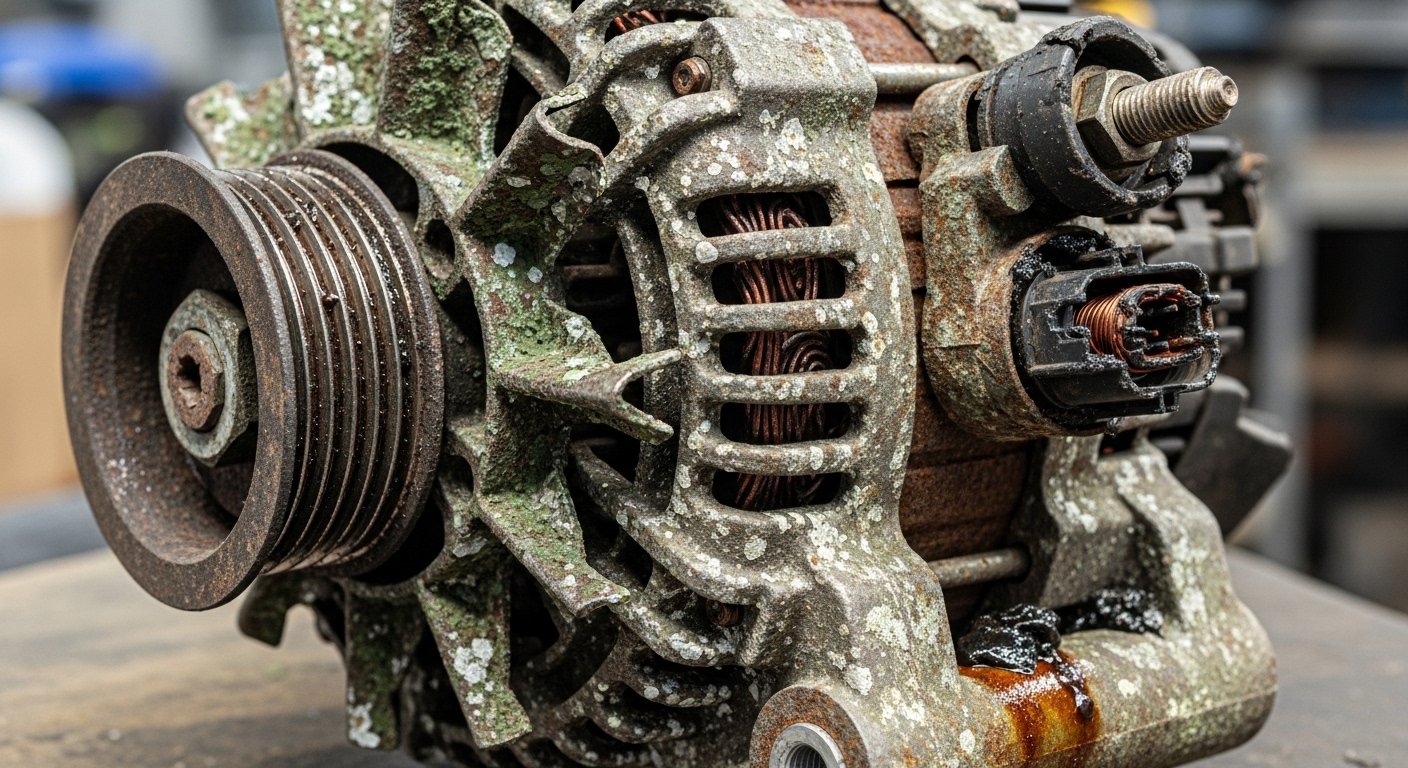
An alternator that is not charging the battery can look like repeated battery failure at first. That is why many drivers replace the battery and are frustrated when the symptom returns days later.
Charging problems can come from the alternator itself, but also from belt slip, wiring faults, poor grounds, and control issues on some vehicles.
Voltage testing under load is what separates charging-system failure from a battery that is simply old.
Use these pages to compare likely causes, next steps, and the most relevant mobile repair service.
Used when charging voltage is low, lights flicker, or the battery keeps dying.
Helpful when slow cranking, repeated jumps, or overnight drain point to battery failure.
When the battery is new but the vehicle still keeps ending up dead.
Urgent mobile help when the car dies at the wrong time.
Only briefly. The new battery may start the car, but it will go weak again if charging is not restored.
It is useful, but testing is still needed because wiring and sensor issues can affect the warning.
Yes, once the battery reserve is exhausted.
Yes. A slipping belt can reduce charging output.
Yes, charging-system checks are common mobile diagnostic work.
Call or text 562-850-1210 for mobile service in West Whittier-Los Nietos, Whittier, Pico Rivera, Santa Fe Springs, La Mirada, Norwalk, and Downey.