
What changes the urgency
- Whether the engine is shaking
- If the light flashes only under load
- Presence of fuel smell or poor power
- History of recent ignition or charging issues
- Whether other warning lights appeared too
Diagnostic Guide
A flashing check engine light is usually more urgent than a steady light because it can point to active misfire severe enough to damage the catalytic converter.
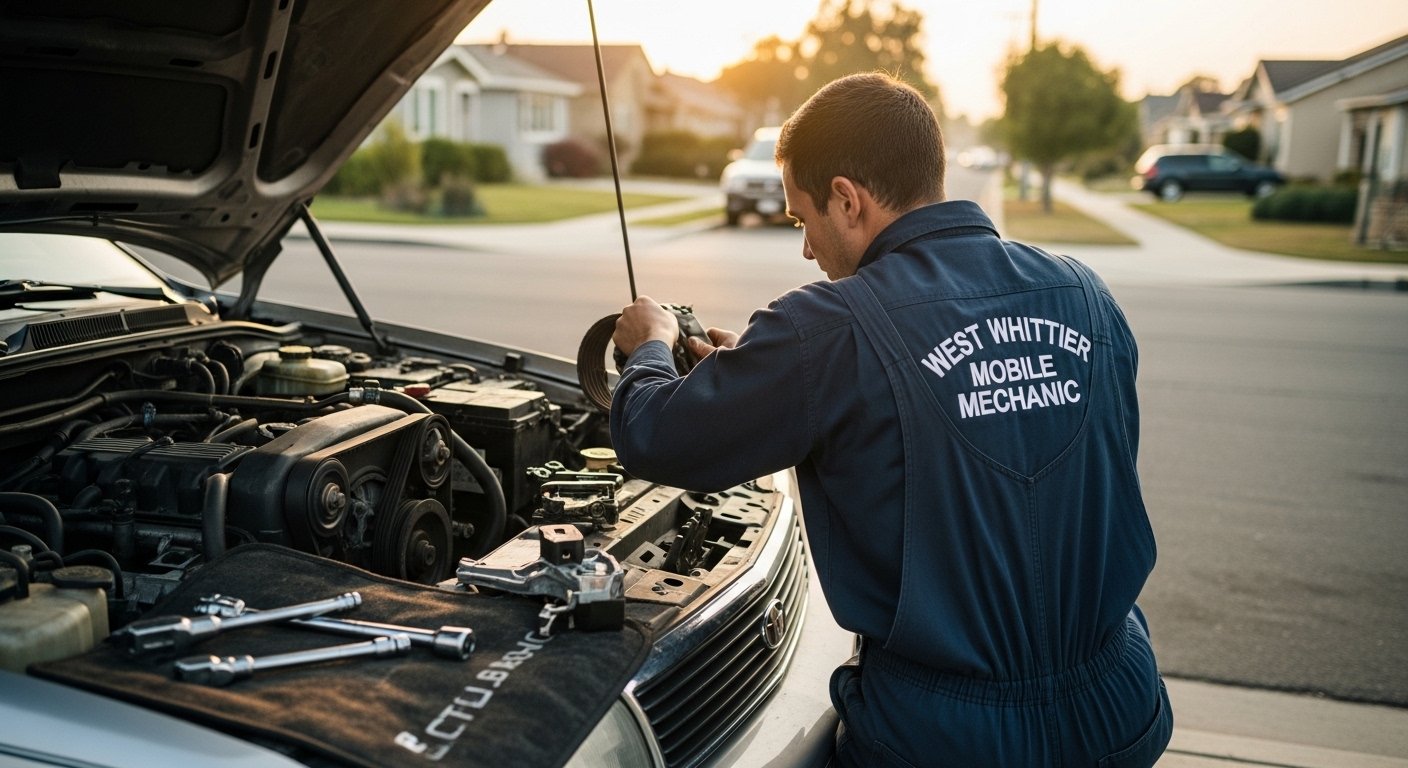
A solid check engine light means the computer has stored a fault that still needs diagnosis. A flashing light usually means the fault is active enough, often a misfire, that continuing to drive can create more damage.
What matters most is not just the light itself but what the vehicle is doing with it. Rough running, shaking, lack of power, and fuel smell all raise the urgency. A smooth-running car with a steady light is still important, but it is usually a different level of risk.
Drivers should treat a flashing light as a stop-pushing-it warning rather than just another dashboard annoyance.
Use these pages to compare likely causes, next steps, and the most relevant mobile repair service.
On-site testing to separate battery, starter, charging, and drivability faults.
When a warning light needs to be diagnosed before parts are guessed at.
Used when charging voltage is low, lights flicker, or the battery keeps dying.
Urgent mobile help when the car dies at the wrong time.
Usually yes, because it often signals an active misfire that can damage the catalytic converter.
It may be less urgent than flashing, but it still needs diagnosis because the underlying fault can get worse.
Clearing codes does not fix the issue and can erase clues.
Low voltage can create odd codes, which is why charging and battery condition still matter.
Yes, many check engine complaints can be narrowed with mobile diagnostic service.
Call or text 562-850-1210 for mobile service in West Whittier-Los Nietos, Whittier, Pico Rivera, Santa Fe Springs, La Mirada, Norwalk, and Downey.