
Best clues in the battery vs alternator decision
- Resting battery voltage
- Charging voltage while running
- How the car behaves after a jump
- Condition of terminals and cables
- Whether electrical loads trigger the symptom
Repair Decision
Repeated no-starts, dim lights, and dead batteries can come from either part. The right decision depends on testing the starting and charging system together.
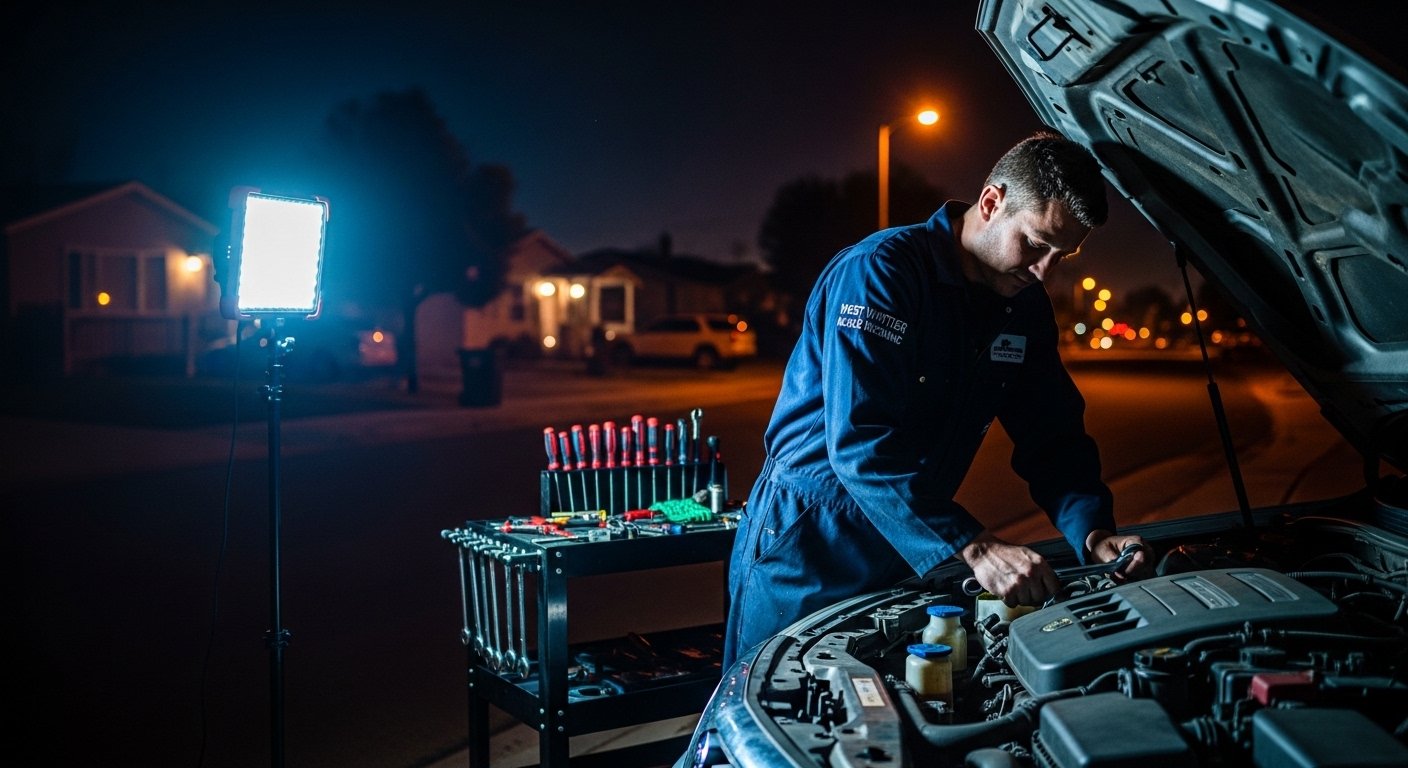
Drivers often choose between battery and alternator replacement based on whichever part seems easier to blame. That usually leads to wasted money when the real fault was in the other part or in the connections between them.
A weak battery can make the alternator work harder. A weak alternator can undercharge a good battery. That is why the system has to be evaluated as a pair rather than as isolated parts.
The practical answer is simple: test first, then replace only the part that actually failed or both if both are weak.
Use these pages to compare likely causes, next steps, and the most relevant mobile repair service.
Helpful when slow cranking, repeated jumps, or overnight drain point to battery failure.
Used when charging voltage is low, lights flicker, or the battery keeps dying.
When the battery is new but the vehicle still keeps ending up dead.
A high-intent problem page covering batteries, starters, charging, and ignition faults.
Yes. Undercharging or overcharging can shorten battery life quickly.
No. Parasitic drain, old battery age, and short-trip use can also be involved.
Yes, especially after repeated no-start events or prolonged charging failure.
That leans more toward charging failure than a simple battery-only issue.
No. It only tells you the battery was low at that moment.
Call or text 562-850-1210 for mobile service in West Whittier-Los Nietos, Whittier, Pico Rivera, Santa Fe Springs, La Mirada, Norwalk, and Downey.